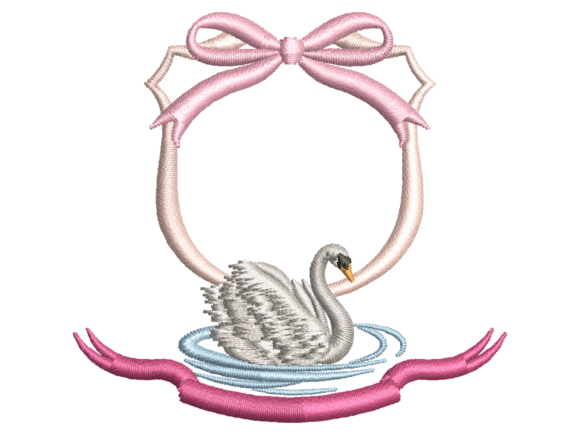
Bow Swan Wreath Embroidery
First Impression: Soft, Whimsical, and Instantly Recognizable
As an embroidery designer who’s prepped over 200 craft fair booths—and watched thousands of shoppers pause at a single stitch—I’ll say it straight: Bow Swan Wreath Embroidery lands with quiet confidence. It’s not loud or trendy; it’s soft, gentle, and deeply intentional. The title alone evokes nursery charm—think heirloom baby blankets, organic cotton onesies, and hand-stitched wall hangings—but its visual language is broad enough to cross into boutique home goods and mindful gifting. It reads as elegant *and* approachable: no harsh lines, no cluttered motifs. Just a graceful swan nestled in a wreath, crowned with a delicate bow. That balance makes it a rare find: a machine embroidery design that feels handmade even before the needle moves.
Where It Shines: Craft Fair-Ready Product Pairings
This isn’t a one-trick embroidery file. In real-world booth testing, Bow Swan Wreath Embroidery consistently drew attention on three key items: embroidered tea towels, linen pillow covers, and structured cotton tote bags. Why? Because it scales beautifully—tight enough for a 3” hoop on a corner patch, yet rich enough to anchor a 7” placement on a market bag front. On tea towels, it reads like a signature detail—not a filler—but never overwhelms the fabric’s texture. On pillow covers, it adds instant heirloom warmth without competing with patterned backing fabrics. And on totes? It transforms utilitarian canvas into giftable, boutique-worthy pieces. I’ve seen customers pick up plain aprons and pouches just to ask, “Do you have that swan one?”—proof that this design builds curiosity and connection.
Performance Breakdown by Product Type
- Tote bag design: Works best centered on the lower third—creates balance and leaves room for subtle branding. Avoid placing too high or near seams where distortion can occur.
- Apron embroidery: Ideal above the pocket or centered on the bib. Its curved shape echoes apron darts and waist ties, reinforcing cohesion.
- Tea towel embroidery: Perfect for the lower corner or folded edge. Holds up well on textured terry weaves when stabilized properly.
- Embroidered patch: Excellent candidate for iron-on or sew-on patches—clean outer edge and minimal interior fill make it stable and fray-resistant.
- Pillow cover & pouch: Adds premium perception instantly. Customers associate the swan motif with care and intention—key for handmade product pricing.
- Etsy seller listings: Photographs exceptionally well—even on smartphone mockups. Its symmetry and soft contrast translate cleanly to thumbnails and printable mockups.
Production Reality Check: What You Need to Know Before Stitching
Let’s be practical: Bow Swan Wreath Embroidery is beginner-friendly in concept but demands thoughtful execution. It’s not a “load-and-go” file. Here’s what your embroidery machine—and your time—will thank you for checking first:
- Stitch density matters. The bow and wreath loops contain moderate fill areas—dense enough to read clearly on light fabric, but potentially heavy on thick canvas or dark denim. Always test on scrap fabric matching your final product’s weight and texture.
- Thread colors are your secret amplifier. A pale blush bow against ivory linen reads serene. Swap to navy thread on oatmeal toweling? Suddenly it’s modern farmhouse. Don’t default—curate. Your thread palette directly shapes perceived value.
- Hoop size and stabilizer choice are non-negotiable. This design benefits from medium-weight cutaway or tear-away stabilizer, especially on knits or loosely woven tea towels. Confirm the recommended hoop size before digitizing adjustments—it impacts how cleanly the curves render.
- Avoid shrinking below 2.5 inches. Tiny details—the swan’s eye, bow knot definition, wreath leaf separation—lose clarity fast. If you’re planning small embroidered patches or cap fronts, verify the file includes a simplified version or plan to simplify manually.
- Curved surfaces need caution. While lovely on flat textiles, avoid placing this design across the crown of a baseball cap unless you’ve tested hooping and tension on that exact cap style. The wreath’s circular flow doesn’t adapt naturally to deep curvature.
Booth & Brand Impact: More Than Just a Pretty Stitch
In a sea of glitter, woodburning, and resin, Bow Swan Wreath Embroidery stands out by being *calm*. It signals craftsmanship, not chaos. At craft fairs, it elevates your entire display—especially when repeated across coordinated items (e.g., matching tea towel + pouch + mini pillow). That repetition builds brand consistency without shouting. Buyers notice it as “the swan line”—a subtle anchor for your small shop product identity. It also invites engagement: parents point it out to toddlers; grandparents comment on its “old-fashioned sweetness”; designers ask where you sourced the embroidery file. That’s earned attention—not bought traffic.
For Etsy sellers and digital sellers alike, this design strengthens your design assets portfolio. It’s versatile enough for seasonal bundles (add spring florals or neutral-toned ribbons), scalable for commercial embroidery licensing, and emotionally resonant for the Nursery category without feeling infantilized. When paired with clean photography and authentic storytelling, it converts browsers into buyers—not because it’s flashy, but because it feels *true*.
Final Designer Notes: Do This Before You Sell
- Test the embroidery file on scrap fabric matching your intended product’s weight, stretch, and texture.
- Check thread contrast—especially on dark or heathered fabrics. A white swan on charcoal linen may vanish without metallic or high-sheen thread.
- Review spacing between elements: ensure the bow doesn’t crowd the swan’s neck or the wreath doesn’t bleed into adjacent text or logos.
- Confirm hoop size compatibility with your machines—and whether the file includes multiple sizes or only one.
- Inspect stitch density visually in your embroidery software. Look for overlapping fills or under-digitized inner curves.
- Use the right stabilizer—cutaway for knits, tear-away for stable wovens, and water-soluble for sheer overlays.
- Create at least one real finished product mockup—not just a digital preview. See how light hits the stitches in person.
- Compare how the design reads across three fabric colors (e.g., ivory, oat, charcoal) to guide your product colorway decisions.
- Verify commercial licensing terms before selling finished products—this is a digital embroidery file, and usage rights vary by seller.