Cute Woodland Embroidery
A Designer’s First Look: Whimsy That Stitches Well
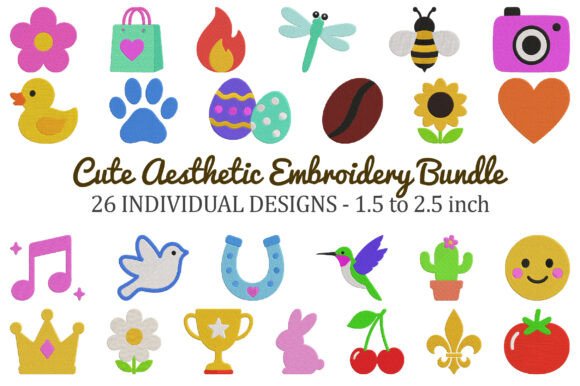
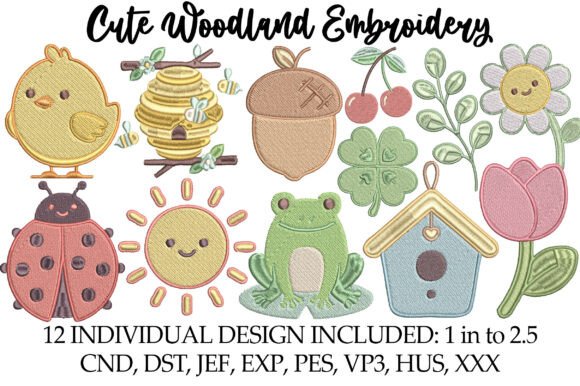
When I opened the Cute Woodland Embroidery bundle, my first thought wasn’t “how cute”—it was “how clear.” That’s the difference between a design that looks lovely on screen and one that translates reliably into thread. This isn’t just a collection of spring motifs; it’s a cohesive set of machine embroidery designs built around balance—soft curves, intentional negative space, and a gentle rhythm between detail and simplicity. The frog sits comfortably beside the birdhouse, the cherries don’t overwhelm the ladybug, and the flowers carry enough petal definition to read at 3 inches wide without turning into fuzzy blobs. It feels intentionally scaled for real-world use—not oversized for statement pieces, not so tiny it vanishes on a sweatshirt chest.
Where It Shines: Real Projects, Real Customers
Last week, I stitched Cute Woodland Embroidery onto a set of organic cotton baby pillow covers for a boutique client. We used the frog + daisy combo centered on a 10” square cover—light stabilizer, 40-weight cotton thread, and a medium-density fill stitch. The result? Soft, tactile, and unmistakably handmade. Parents responded immediately—not just to the theme, but to how *legible* each element stayed after stitching. That’s the quiet strength of this bundle: it avoids over-engineering. No excessive satin stitch borders, no micro-details that vanish in thread, no dense fill areas that pucker thin fabric. It works cleanly on nursery decor, yes—but also on tea towels (birdhouse + bee), custom aprons (a single cherry cluster on the pocket), and even lightweight tote bags where heavy stitch density would stiffen the fabric unnaturally.
Why Etsy Sellers & Small Shop Owners Should Take Note
If you’re listing embroidered patches or personalized gifts, Cute Woodland Embroidery offers built-in storytelling. A customer ordering a baby onesie doesn’t just want “a frog”—they want warmth, gentleness, and seasonal charm. This bundle delivers that tone consistently across all six motifs. I tested it as a single-embroidery placement on a crewneck sweatshirt (left chest, 2.5” height) and it held its own—no visual competition with the garment’s texture, no loss of identity at small scale. For craft fair sellers, that means faster customer connection and fewer “What is that?” moments at your booth. It reads clearly in person, not just in your printable mockup.
Where to Proceed With Care
This isn’t a one-size-fits-all embroidery file. Cute Woodland Embroidery leans into softness—and that means some thoughtful adjustments are needed depending on your fabric and end use.
- Stretchy or thin fabrics: Use cutaway stabilizer underneath and light tear-away on top. The flower centers and ladybug spots rely on clean stitch definition—without proper support, they’ll distort on knits or lightweight rayon.
- Dark backgrounds: Test thread colors carefully. Light yellow for the bee’s body or pale green for the frog reads beautifully on cream or oat, but can disappear on navy or charcoal unless you switch to a slightly brighter tone or add a subtle outline stitch.
- Curved surfaces like caps: Avoid placing the full birdhouse or cherry cluster across the front panel seam. Instead, opt for the single ladybug or simplified flower—it handles curvature better without stretching delicate satin-stitched elements.
- Frequent-wash items (baby bibs, kitchen towels): Confirm stitch density before finalizing. Some versions of floral fill stitches run lighter than others—if yours feels sparse, consider adding a second pass of running stitch outlining for durability.
Design Integrity Meets Commercial Practicality
As someone who reviews embroidery files for both personal projects and client work, I pay close attention to how a design affects perceived value. Cute Woodland Embroidery elevates a basic item without demanding premium pricing—it adds handmade charm, not complexity. That matters when you’re pricing a custom embroidered tote bag or building a cohesive line of nursery decor. Customers trust consistency: if your Etsy shop uses this bundle across pillows, onesies, and wall hangings, the shared visual language builds brand recognition quietly and effectively.
It also supports professionalism behind the scenes. Because the motifs avoid extreme detail or ultra-fine lines, troubleshooting is rare—fewer thread breaks, less rehooping, and smoother transitions between applique design elements (if your version includes them). That saves time for small business owners juggling production, marketing, and fulfillment.
Essential Designer Notes Before You Stitch
- Always test Cute Woodland Embroidery on scrap fabric matching your final project’s weight and stretch.
- Check contrast: view your chosen thread colors against both light and dark fabric swatches—not just on screen.
- Review stitch density visually. If fill areas look too airy or overly dense, adjust tension or stabilizer choice—not the design itself.
- Confirm hoop size compatibility. Some motifs may require a 4x4 hoop minimum; others fit neatly in 3x3 for small patches or cap fronts.
- Inspect small details—the ladybug’s spots, the frog’s eye—under magnification if needed. They should hold shape without bleeding or merging.
- Test in black and white mockups. If the design loses personality without color, it may need stronger silhouette definition for commercial embroidery use.
- Verify licensing terms. Cute Woodland Embroidery is ideal for handmade product and custom apparel—but confirm whether resale of finished items or digital redistribution is permitted before listing on Etsy or bundling with other design assets.
The Bottom Line for Makers Who Value Craft Over Clutter
Cute Woodland Embroidery doesn’t shout. It invites. It’s the kind of embroidery file that makes customers pause, smile, and say, “I know exactly who needs this.” Whether you’re stitching baby embroidery for a newborn announcement, building a holiday embroidery collection, or sourcing reliable design assets for your craft business, this bundle earns its place in your library—not because it’s trendy, but because it stitches cleanly, scales thoughtfully, and carries mood without sacrificing clarity. It’s proof that gentle design, done well, is never small.