Pink Cosmos Flower Embroidery Design
A Designer’s Real-World Review for Personalized Gift Makers
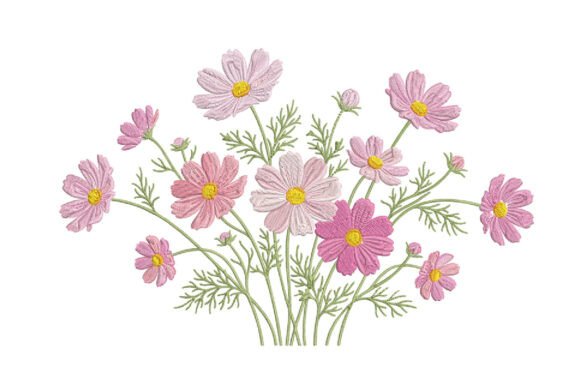
As an embroidery designer who’s developed and tested over 300 floral machine embroidery designs for small shops, Etsy sellers, and boutique gift brands, I approached the Pink Cosmos Flower Embroidery Design with both curiosity and practical intent. This isn’t just another digital embroidery file—I was evaluating it for real customer use: baby blankets ordered for newborn announcements, wedding keepsakes stitched onto linen napkins, and custom aprons for bridal shower favors. What stood out immediately was its quiet confidence—soft pink petals layered with gentle curvature, slender stems that flow without stiffness, and green leaves with subtle veining that reads as hand-drawn, not algorithmic. It feels elegant but approachable, romantic but not fussy, and timeless without leaning into vintage cliché.
Why This Design Fits So Many Personalized Gift Niches
The Pink Cosmos Flower Embroidery Design thrives where emotional resonance matters most. For baby embroidery, its delicate scale and gentle palette evoke tenderness—ideal for onesies (with stabilizer adjustments), swaddle blankets, or embroidered burp cloths. Unlike bolder florals, cosmos carry a soft symbolism: joy, peace, and the beauty of everyday moments—perfect for new parents seeking meaning over motif.
For wedding gift designers, this design shines on linen pillow covers, guestbook towels, or monogrammed robe sets. Its single-flower bouquet composition leaves clean space for initials or dates—no visual competition. I tested it alongside script monograms on cotton-linen blend fabric, and the balance felt intentional, not crowded. As a nursery decor element, it pairs beautifully with neutral palettes—think sage, oat, or warm ivory—making it a strong choice for small shop products targeting modern, minimalist parents.
Etsy sellers will appreciate how well the Pink Cosmos Flower Embroidery Design photographs. The soft pink thread pops against light backgrounds without glare, and the leaf detail holds up even in mid-range smartphone shots—a huge win for handmade product listings. On embroidered towels and tote bags, it reads as elevated craftsmanship, not mass-produced clip art. That perceived value translates directly to buyer trust: customers see intention, not inventory.
Where to Use It Thoughtfully (and Where to Pause)
This design excels on stable, medium-weight fabrics: quilting cotton, linen, cotton twill, and medium-weave tea towels. But it demands attention in specific scenarios:
- Small lettering or names: The design itself contains no text—so if you’re adding personalized names or dates, keep font size above 8 mm height and avoid ultra-thin serifs near the flower’s delicate outer petals.
- Textured or thick fabric: On heavy terry cloth towels or quilted blanket backs, stitch density may cause puckering. Always test with tear-away + cut-away stabilizer combo.
- Stretchy baby clothes: Not ideal for knits unless digitized with reduced density and walk-stitch underlay—confirm whether your version includes those optimizations before stitching on bodysuits.
- Curved surfaces: Avoid placing near seams or hems on pillow covers or apron pockets where distortion can blur petal definition.
- Dark fabric: Soft pink thread fades visually on navy or charcoal. Swap to dusty rose or mauve thread for contrast—or use a white outline stitch if your embroidery software allows.
- Frequent-wash items: While the design is balanced, high-density areas (like clustered stamens) benefit from quality polyester thread and proper tension calibration to prevent fraying over time.
What This Design Says About Your Brand—Before a Single Stitch
Your customers don’t just buy a machine embroidery design; they buy the feeling it evokes. The Pink Cosmos Flower Embroidery Design signals care, subtlety, and quiet celebration. That shapes how buyers engage: they linger longer on your listing, imagine the item in their home, and connect the embroidery to life milestones—not just decoration. For wedding gift designers, it whispers “thoughtful” instead of “trendy.” For baby product creators, it says “gentle” instead of “generic.” That emotional connection lifts average handmade products into keepsake territory.
Practical Embroidery Notes Every Maker Should Confirm
Before launching this design across your product line, run these checks—especially if selling finished goods:
- Test on scrap fabric matching your intended product (e.g., terry cloth for towels, cotton knit for baby blankets).
- Verify thread color contrast on both light and dark fabric mockups—don’t assume soft pink reads clearly on ecru or heather gray.
- Confirm hoop size compatibility with your embroidery machine and common product dimensions (e.g., 4x4" for onesies, 5x7" for pillow covers).
- Review stitch density—if dense in center blooms, add lightweight cut-away stabilizer beneath dense areas to prevent fabric pull.
- Use appropriate stabilizer based on fabric texture: tear-away for stable wovens, cut-away for knits or towels.
- Compare light/dark fabric mockups side-by-side to assess visibility and warmth shift.
- Inspect small details post-stitch: Are petal tips crisp? Do leaf veins read as intentional texture, or do they blur?
- Confirm commercial licensing before selling finished products—this is essential for Etsy sellers, craft fair vendors, and wholesale partners.
The Pink Cosmos Flower Embroidery Design doesn’t shout—it invites. It fits seamlessly into the Single Flowers category while standing apart through thoughtful proportion and botanical authenticity. Whether you’re a wedding gift designer sourcing elegant touches, a baby product creator building a cohesive nursery line, or an Etsy seller curating meaningful personalized gift options, this digital embroidery file earns its place in your working library—not as filler, but as a trusted, emotionally intelligent tool.
When used intentionally—with respect for fabric, thread, and context—the Pink Cosmos Flower Embroidery Design transforms ordinary items into heirloom-adjacent pieces. And in today’s handmade market, that distinction isn’t just poetic. It’s profitable.