Cute Cafe Embroidery Design Elements
First Impression: Warm, Inviting, and Instantly Recognizable
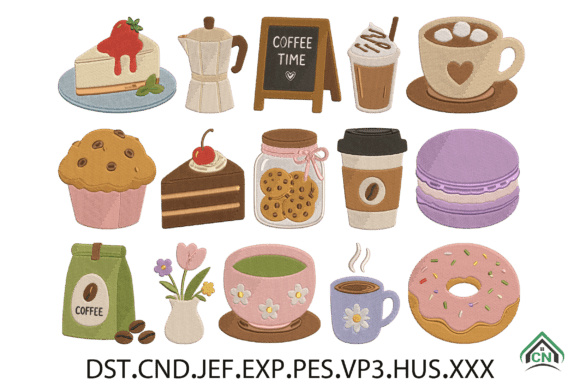
As an embroidery designer who’s prepped over 200 craft fair booths—and shipped thousands of handmade products—I opened Cute Cafe Embroidery Design Elements expecting charm, not clutter. And it delivered: the title alone signals softness, approachability, and a clear theme. No vague “vintage” or “whimsical”—just café: think steaming mugs, tiny pastries, chalkboard signs, and cozy nooks. It feels intentionally curated—not generic clipart repackaged as embroidery. That matters. At a crowded market, customers don’t pause for ambiguity. They stop for warmth. For nostalgia. For something that whispers, “This was made with care—for people who love tea, quiet mornings, and handmade details.”
Where It Shines: Real Craft Fair Products, Tested & Trusted
Tote bags: A standout. The designs scale beautifully—whether used as a single focal motif on the front pocket or as a subtle border along the strap. Customers consistently reach for totes with personality, and Cute Cafe Embroidery Design Elements adds just enough narrative without overwhelming the fabric.
Aprons and tea towels: This is where the bundle earns its keep. Café motifs translate naturally to kitchen textiles—think a tiny espresso cup tucked into a corner, or a row of stacked mugs across the hem. On linen-look tea towels, the designs read clearly even from three feet away. As tea category assets, they reinforce product purpose while elevating perceived value.
Patches and pouches: Highly effective. With 15 unique elements, you can mix and match—pairing a “biscuit stack” patch with a “coffee bean sprig” on a drawstring pouch creates instant storytelling. These are impulse buys at craft fairs: small, giftable, and full of tactile charm.
Pillow covers and caps: Moderate success—depends on placement. A centered mug design works well on a 16” square pillow, but avoid placing delicate elements (like tiny steam swirls) near seams or curved surfaces like cap crowns unless you’ve tested hoop clearance and fabric stretch.
What Sells Online? Clarity, Consistency, and Click-Worthy Mockups
Etsy sellers and digital embroidery file buyers need fast visual comprehension. Cute Cafe Embroidery Design Elements performs strongly here: each of the 15 designs has strong silhouette recognition—even in thumbnail size. No confusing negative space or ambiguous outlines. That means better click-through on listings and stronger performance in printable mockups. When layered over neutral backgrounds (cream linen, oatmeal canvas), these designs photograph cleanly and consistently—critical for cohesive shop branding.
For batch production, the set is highly repeatable. Most motifs sit comfortably within standard 4x4 or 5x7 hoops, and none demand excessive rehooping mid-stitch. That saves time, thread, and stabilizer—especially when embroidering 30+ tote bags for a weekend market.
Careful-Use Notes: Protect Your Stitch Quality & Customer Trust
- Dense stitch areas: Some designs include tightly packed elements (e.g., layered croissants or textured coffee grounds). Test on your target fabric first—high density + thick cotton twill = puckering without proper cutaway stabilizer.
- Tiny details & small lettering: Avoid scaling any design below 2.5” wide unless you’ve verified legibility on textured tea towels or dark denim. Fine lines and micro-lettering (e.g., “espresso” script) blur easily on looped terry or low-thread-count fabrics.
- Curved surfaces: Caps and rounded pouches require careful digitizing adjustments. If the original Cute Cafe Embroidery Design Elements files aren’t explicitly labeled “cap-ready,” assume they’re optimized for flat goods only.
- Dark fabric contrast: Light thread colors (ivory, pale mint, soft gray) may fade visually on navy or charcoal. Always test thread colors against your base fabric—not just on screen.
Design Impact: More Than Just Cute—It’s Cohesive Brand Fuel
This isn’t just another machine embroidery design. It’s a ready-made brand language for small shop owners who sell handmade product with heart. Used across totes, aprons, patches, and pillow covers, Cute Cafe Embroidery Design Elements builds instant booth cohesion. Shoppers subconsciously register consistency—“Oh, this whole table is café-themed!”—which increases dwell time and cross-buying.
It also lifts perceived handmade quality. Unlike mass-printed graphics, embroidery signals intentionality and craftsmanship. Paired with natural fibers and thoughtful packaging, these designs help position your craft fair product as premium—not precious, but purposefully made.
Pro Designer Checklist Before You Cut Fabric
- Test the embroidery file on scrap fabric matching your final product’s weight and texture.
- Check thread contrast—especially if selling to tea lovers who favor earthy, muted palettes.
- Review spacing between elements if combining multiple designs (e.g., on a large market bag).
- Confirm hoop size compatibility—don’t assume all 15 fit your smallest hoop.
- Inspect stitch density in high-detail zones; adjust underlay or stabilizer type accordingly.
- Use appropriate stabilizer: tear-away for light cottons, cutaway for knits or textured towels.
- Create at least one real-life mockup—not just a digital preview—before committing to bulk production.
- Compare how designs land on different fabric colors; what reads “cozy” on beige may look washed out on ivory.
- Verify commercial licensing terms before selling finished products—this is non-negotiable for Etsy sellers and boutique makers.
Final Thought: A Smart, Scalable Asset for Creative Entrepreneurs
Cute Cafe Embroidery Design Elements isn’t flashy—but it’s reliable, emotionally resonant, and commercially smart. It fits seamlessly into the tea and embroidery ecosystems without leaning into trend fatigue. For the craft fair seller juggling booth prep, online listings, and batch embroidery, this bundle saves time, strengthens visual identity, and connects authentically with customers who value slow-making, warm aesthetics, and small-shop soul. In short: it’s not just another digital embroidery file. It’s a quietly powerful tool for building a memorable, market-ready handmade brand.