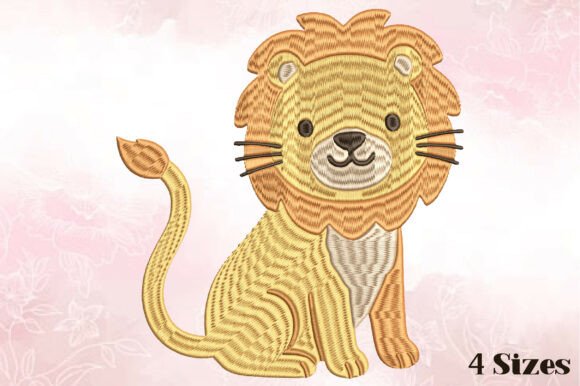
Cute Baby Lion Embroidery Design
First Impressions: Sweet, Soft, and Surprisingly Versatile
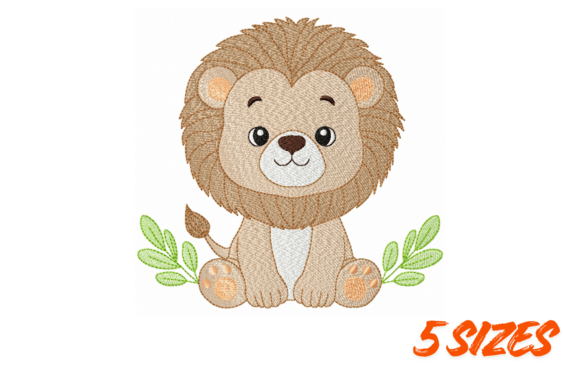
When I opened the Cute Baby Lion Embroidery Design file, I smiled—immediately. It’s not just “cute”; it’s emotionally resonant. The baby lion has that gentle kawaii roundness—soft curves, wide eyes with subtle satin-stitched highlights, and a fluffy mane built from layered fill stitches that suggest volume without overcrowding. There’s no aggressive detail or sharp geometry here; instead, the design breathes with intention. It feels handmade in spirit, even as a digital embroidery file—and that matters deeply when you’re stitching for real people, not just pixels.
A Real-World Test: Stitching It on a Linen-Cotton Baby Tote
Last week, I prepped a custom order: a linen-cotton tote for a new mom, meant to hold diapers, burp cloths, and tiny shoes. I chose the Cute Baby Lion Embroidery Design for the front pocket—not too big, not too small—and ran it at 3.8” wide. On medium-weight fabric with tear-away + light cutaway stabilizer, it stitched cleanly. The mane held its puffiness, the cheeks stayed smooth (no thread pooling), and the outline remained crisp. Customers notice those quiet wins—the way a stitch doesn’t snag on a baby’s cheek, or how the lion’s expression stays warm and legible after washing. This design delivers that.
Where It Shines (and Where It Asks for Care)
The Cute Baby Lion Embroidery Design excels in soft, high-emotion contexts: baby onesies, nursery pillows, organic cotton tea towels, embroidered patches for toddler backpacks, and personalized sweatshirts for baby showers. Its balanced stitch density keeps it stable on knit fabrics—especially with proper stabilizer—but I’d avoid pushing it below 3” on stretchy jersey or ultra-thin voile. Tiny corners (like the tip of an ear or inner eye shape) can blur if hooping isn’t precise or tension is off, so always test on scrap first.
On dark fabric? It holds up beautifully—if you choose high-contrast thread (ivory or pale gold over navy, for example). On textured surfaces like terry cloth towels or bouclé baby blankets, reduce density slightly and consider a topping stabilizer. And while it works on caps, keep it centered on the front panel—not curved near the bill—where distortion risks softening those sweet facial details.
What It Adds to Your Finished Product (Beyond Cuteness)
This isn’t just decoration. The Cute Baby Lion Embroidery Design elevates perceived value instantly. A plain cotton bib becomes a boutique-ready gift. A generic tote gains personality and emotional resonance—something buyers remember and tag on social media. For Etsy sellers and small shop owners, that translates to better photo appeal, stronger mockup presentation, and higher conversion on listings. It also supports brand consistency: if your craft business leans into gentle, nature-inspired baby themes, this design fits right in—no forced styling needed.
Importantly, it reads as *handmade*, not mass-produced. The slight variation in fill stitch direction, the intentional spacing between mane strands, the absence of overly rigid symmetry—it all whispers care. That builds customer trust, especially for personalized gifts where sentiment matters more than scale.
Design Notes Every Embroiderer Should Check Before Stitching
- Test first—on the exact fabric + stabilizer combo you’ll use. Linen behaves differently than Pima cotton; fleece reacts differently than quilting weight.
- Review thread color contrast before finalizing. Light threads on light fabric can vanish; dark-on-dark needs extra stitch definition.
- Check stitch density—not just for stability, but for breathability. Overly dense fills on baby items can stiffen seams uncomfortably.
- Confirm hoop size compatibility. If you’re using a 4×4 hoop, verify the design fits comfortably with ¼” margin—no last-minute scaling.
- Inspect small details in your embroidery software: eyelashes, nose contour, and mane separation should be distinct, not fused.
- Mock it in black and white—this reveals clarity issues hidden by color. Does the lion still read clearly without hue cues?
- Compare light vs. dark backgrounds in your digital preview. Some fill patterns disappear on certain tones.
- Use appropriate stabilizer: lightweight cutaway for knits, tear-away for stable wovens, and topping for napped or textured fabrics.
- Verify licensing before selling finished items or bundling the Cute Baby Lion Embroidery Design as part of a commercial product pack. Not all embroidery files permit resale of stitched goods.
Fitting Into Your Creative Workflow
As a designer who supplies embroidery assets to small businesses, I’ve seen how one well-chosen machine embroidery design can anchor a whole seasonal collection. The Cute Baby Lion Embroidery Design pairs naturally with simple monograms, leaf sprigs, or minimalist safari silhouettes—never competing, always complementing. It’s equally effective as a standalone focal point on a pillow cover or scaled down as a subtle accent on a baby cap brim.
For digital product sellers, it’s strong as a single-download item—but even stronger bundled with coordinating animal designs (think baby elephant or sloth) under a “Baby Safari” theme. And for craft fair vendors? It embroiders quickly, photographs well, and sparks joyful reactions—parents pause, smile, and ask, “Is that for babies?” Yes. Yes, it is.
Final Thought: Charm With Craftsmanship
The Cute Baby Lion Embroidery Design doesn’t shout. It invites. It balances kawaii sweetness with thoughtful construction—no unnecessary stitches, no fragile elements, no visual clutter. That’s rare. In a market flooded with overly busy or technically thin embroidery files, this one earns its place in real projects: on heirloom baby blankets, boutique aprons for pediatric clinics, holiday stockings, and personalized gifts that get kept, not tucked away. If your work values warmth, wearability, and quiet professionalism—this design belongs in your library.