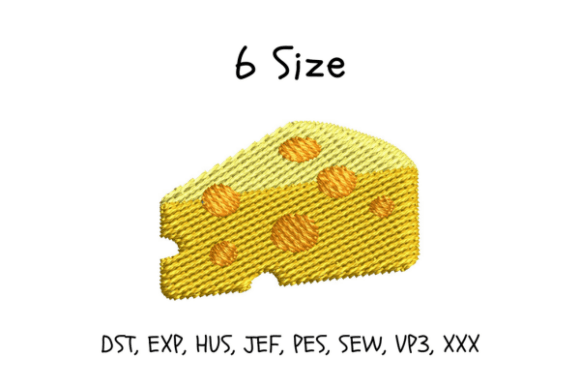
Cheese Embroidery Design
A Practical Review for Small Business Merchandise & Branded Patches
As an embroidery designer who’s digitized and stitched thousands of logos for cafés, bakeries, boutiques, pet brands, and handmade studios, I approach every new machine embroidery design with two questions: “Does it translate professionally at scale?” and “Will it hold up—visually and structurally—on real business merchandise?” When I first saw the Cheese Embroidery Design, my instinct was to pause. The title alone suggests warmth, approachability, and a touch of playful authenticity—qualities small businesses lean on heavily to build trust and recognition. But titles don’t stitch. So I dug deeper.
First Impression: Friendly, Rustic, and Ready for Real-World Use
The Cheese Embroidery Design feels intentionally grounded—not overly polished, not cartoonish, but warmly human. It carries that subtle handmade product charm without sacrificing clarity. For a bakery launching branded aprons or a local cheese shop creating embroidered tote bags, this tone is gold. It reads as genuine, not generic. It doesn’t scream “corporate”; it whispers “we made this ourselves.” That alignment with small business values—craft, locality, personality—is where Cheese Embroidery Design begins earning its keep long before the first thread is cut.
Where It Shines in Commercial Embroidery Projects
This design excels where many food-themed embroidery files falter: versatility across applications. As an embroidered patch, it holds shape beautifully—even at 2.5”–3” sizes—thanks to balanced fill areas and intentional negative space. On staff uniforms or café aprons, it reads cleanly from across the room. For cap embroidery, it works well centered on the front panel when scaled to 2.0”–2.25”, especially with simplified outlines (more on that below). As a sleeve detail on work shirts or a subtle mark on the corner of a linen tote bag, it adds brand identity without overwhelming.
Small business owners using Cheese Embroidery Design for product packaging accents—like sewn-on tags for artisanal cheese boxes or reusable produce bags—will appreciate how its clean lines reproduce consistently. Etsy sellers and crafters building cohesive design assets can pair it confidently with complementary motifs (think simple herbs, rustic borders, or minimalist dairy icons) without visual competition. And because it’s offered in six sizes, scaling for printable mockups or layered branding systems becomes seamless.
Where Caution Is Needed: Real Fabric, Real Wear
Not every surface is equal—and neither is every stitch count. While Cheese Embroidery Design is described as “simple yet classic,” simplicity doesn’t guarantee foolproof performance. On curved surfaces like cap fronts or tapered tote handles, test stitching is non-negotiable. Tight curves compress stitches; if the original digitizing didn’t account for that, distortion can soften edges or cause thread breaks.
Also watch for potential issues with stitch density. If the cheese wedge or rind detail relies on dense satin borders or tightly packed fills, it may struggle on textured fabric (like heavy canvas totes or looped terry aprons) or dark uniforms where thread coverage matters. Likewise, tiny internal details—say, a subtle hole pattern or fine rind texture—may vanish entirely at under 1.75” patch size. Always run a black-and-white test print first to assess contrast and legibility before committing to thread colors.
Brand Identity & Customer Trust: More Than Just a Motif
For small businesses, every embroidered element contributes to perceived professionalism—and Cheese Embroidery Design delivers on that quietly. Unlike clip-art-style food icons, it avoids cliché while still communicating category (Food) clearly. That balance builds instant recognition without explanation. A customer seeing it on a barista’s apron or a florist’s tote (yes—some flower shops lean into “fromage & foliage” branding!) registers competence, care, and intentionality.
That perception directly impacts product value. A well-executed embroidered patch signals investment—not just in gear, but in guest experience. It tells customers: “We chose this detail deliberately.” That consistency across custom apparel, staff wear, and even event merch reinforces visual cohesion, which strengthens recall and loyalty over time.
Essential Embroidery Designer Notes Before Production
Before you load Cheese Embroidery Design into your machine or send it to a production partner, here’s what I always verify:
- Test it in black and white first—to confirm outline integrity and spacing between elements.
- Check performance at your smallest intended patch size—especially if using it for keychain patches or mini labels.
- Review thread color contrast on your target fabric—light threads on light fabric (or dark on dark) need extra stabilizer and denser underlay.
- Inspect spacing between interior shapes—tight gaps may close up during stitching or washing.
- Confirm hoop size compatibility—not all six sizes will fit standard 4x4 hoops; some may require 5x7 or larger.
- Test on real fabric, not just stabilizer—fabric texture changes everything, especially with knit or loosely woven materials.
- Use appropriate stabilizer: tear-away for stable wovens, cut-away for knits or high-wash items like aprons.
- Create a physical or digital mockup for client approval—never rely on screen-only previews for final sign-off.
- Compare it beside your other design assets—does it share weight, line quality, and proportion with your logo or typography?
- Confirm commercial licensing before use on merchandise for resale—this is critical for Etsy sellers and wholesale partners.
Remember: the digital embroidery file is only as strong as your preparation. A thoughtful review of Cheese Embroidery Design isn’t about perfection—it’s about predictability. And for small business owners juggling design, production, and customer expectations, predictability is the ultimate competitive advantage.
Final Thought: A Smart, Scalable Asset for Food & Craft Brands
Cheese Embroidery Design isn’t just another food-themed motif—it’s a flexible, business-ready tool. Whether you’re stitching caps for a cheese truck, embroidering tote bags for a farmers’ market stall, or adding subtle flair to product packaging, it supports brand storytelling without shouting. It respects the craft behind small-batch goods and honors the quiet confidence of makers who know their audience doesn’t need flash—they need authenticity, consistency, and a little delicious charm. That’s why, after years of reviewing hundreds of embroidery files, I keep Cheese Embroidery Design in my go-to folder for small business merch projects.